
Is Strength Training Safe for Young Hockey Players?
10 October 2026 · Rink Ready
Supervised, age-appropriate lifting is safe for kids; this clears up the growth-plate myths and shows where to start at every age.
The Short Answer: Yes, When It's Done Right
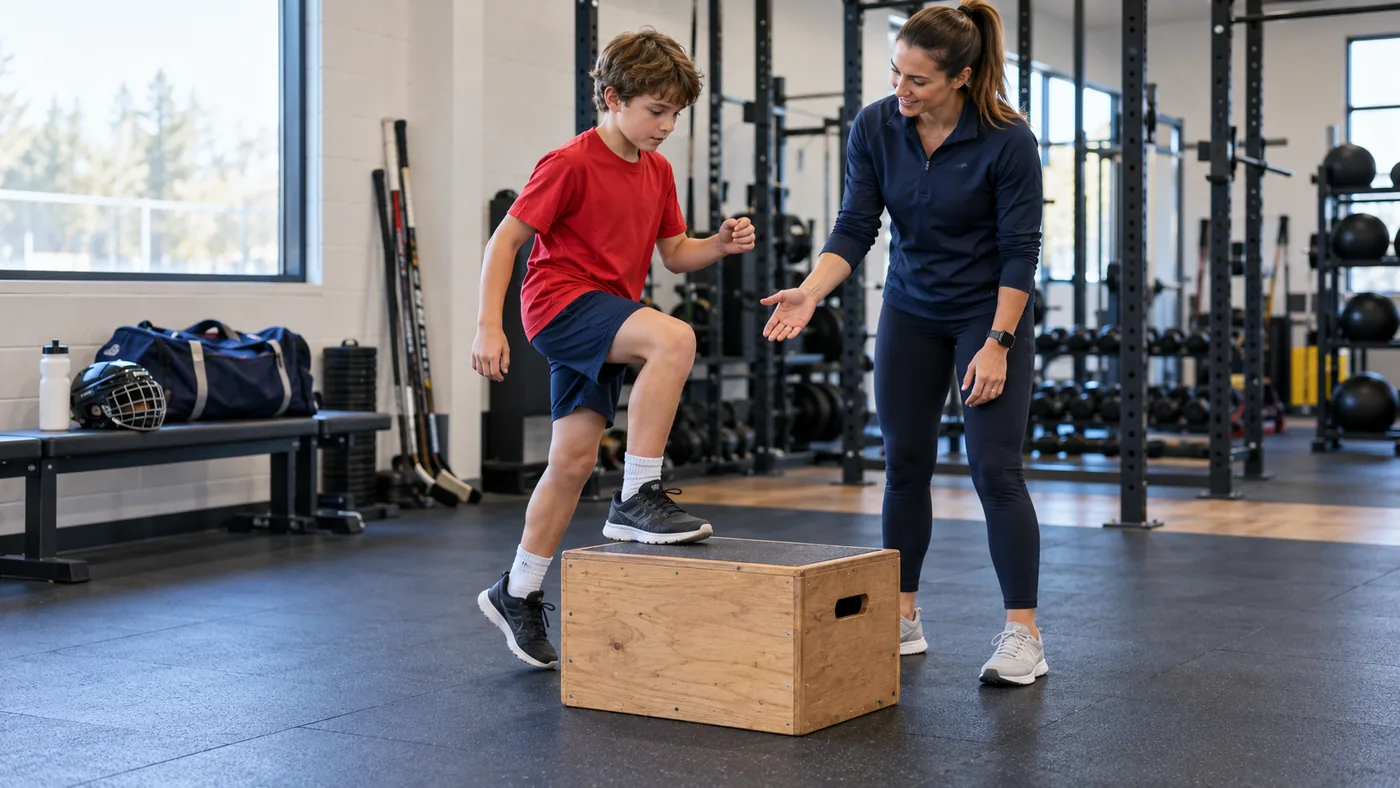
It's one of the most common questions hockey parents ask: is my kid too young to lift? Major medical groups, including the American Academy of Pediatrics, say supervised strength training is safe and beneficial for kids and teens. Many children are ready around age 7 or 8, once they can listen to instructions and follow good form.
The key words are supervised and done right. Strength training for kids looks very different from what you see in a college weight room. Here's what to know.
Three Myths That Won't Go Away
Myth 1: Lifting damages growth plates. Growth plates are the softer areas near the ends of growing bones. Research has not found growth-plate damage from well-supervised, age-appropriate strength training. The injuries that do happen in youth lifting mostly come from unsupervised kids, home equipment accidents, or trying to max out with poor form.
Myth 2: Lifting stunts growth. There's no good evidence for this. How tall your child grows comes down mostly to genetics, nutrition, and sleep. Kids already put far more force through their bodies sprinting, jumping, and crashing into the boards than in a controlled strength session.
Myth 3: My kid will get bulky. Before puberty, kids don't have the hormones to build much muscle size. Their strength gains come from the brain and muscles learning to work together better. That's exactly what makes them more coordinated on the ice.
What Your Player Actually Gets Out of It
- Fewer injuries. Stronger muscles, tendons, and ligaments handle the stops, starts, and collisions of hockey better. Groin and hip strength work is especially protective for skaters.
- Better skating. Leg and core strength turn into a stronger stride, quicker first steps, and better edges.
- Stronger bones. Loading the body during childhood and the teen years helps build bone density that lasts into adulthood.
- Better balance on the puck. A strong core and hips make it harder to get knocked off the puck.
- Confidence and habits. Kids who learn to train well young tend to keep it up, and they walk into high school weight rooms already knowing proper form.
Where to Start, by Age
Ages are a rough guide. Maturity, focus, and coordination matter more than the number on the birthday cake.
- Ages 7–10, movement and body control: bodyweight squats, lunges, push-ups, planks, jumping and landing, balance games. 2 short sessions a week, 20–30 minutes.
- Ages 11–13, learning the lifts: add light dumbbells, kettlebells, and bands. Master form on squats, hinges, and rows before adding weight. Sets of 8–15 reps.
- Ages 14+, building real strength: barbell lifts with a qualified coach, gradual increases in weight, and power work like jumps and med-ball throws.
At every age, the order stays the same: form first, then more reps, then more weight. If the form breaks down, the weight is too heavy.
Safety Rules That Make the Difference
- Always supervised. A knowledgeable adult or coach should be watching, especially with any added weight.
- Warm up every time. 5–10 minutes of easy movement before lifting.
- No max-outs. Young players should never test a one-rep max. Stop sets with a few good reps left.
- Increase slowly. Add weight in small steps, about 5–10% at a time, only after form is solid.
- Rest between sessions. At least one day off between strength workouts.
- Pain means stop. Soreness is normal; sharp or joint pain is not. Check with your doctor if pain sticks around.
- Talk to your pediatrician first if your child has a heart condition, high blood pressure, or a past injury.
Your RinkReady Parent Checklist
- My player can follow instructions and hold good form
- An adult is supervising every session
- Warm-up before every workout
- Form first, then reps, then weight
- No max-out testing
- At least one rest day between sessions
- We stop and get checked for sharp or lasting pain
Strength training won't stunt your player's growth. Done right, it helps them grow into a faster, more confident, and more durable skater. Rink Ready plans scale by age and experience, so your player gets the right work at the right time.