
Recover Like a Pro: Simple Tips for After Practice and Games
26 September 2026 · RinkReady
Cool down, stretch, refuel, sleep well and keep moving the next day: simple habits that help hockey players bounce back faster after every practice and game.
Why Recovery Matters
Hockey asks a lot of your body. Short, all-out shifts, quick stops and starts, battles along the boards, and long rides home all add up. The work you put in on the ice only pays off if your body gets the chance to rebuild afterward.
Good recovery doesn't take fancy equipment or hours of your time. A few simple habits after every practice and game will help you feel fresher at the next skate, cut down on soreness, and lower your risk of injury. Here's what to do, step by step.
The First 30 Minutes: Start Recovering Before You Leave the Rink
What you do right after you step off the ice sets the tone for how you'll feel tomorrow.
Cool down, don't just stop. If you can, take an easy lap or two at the end of the session, or do 5 minutes of light walking or easy cycling once your skates are off. This helps your heart rate come down gradually and keeps blood moving through tired muscles.
Stretch the hockey muscles. Hold each stretch for 20-30 seconds, breathing slowly. Focus on the areas skating works hardest:
- Hip flexors: kneeling lunge, push hips gently forward
- Groin: butterfly stretch or wide side lunge
- Hamstrings: seated toe reach
- Quads: standing heel-to-glute pull
- Lower back: knees-to-chest or child's pose
- Shoulders and chest: doorway or cross-body arm stretch
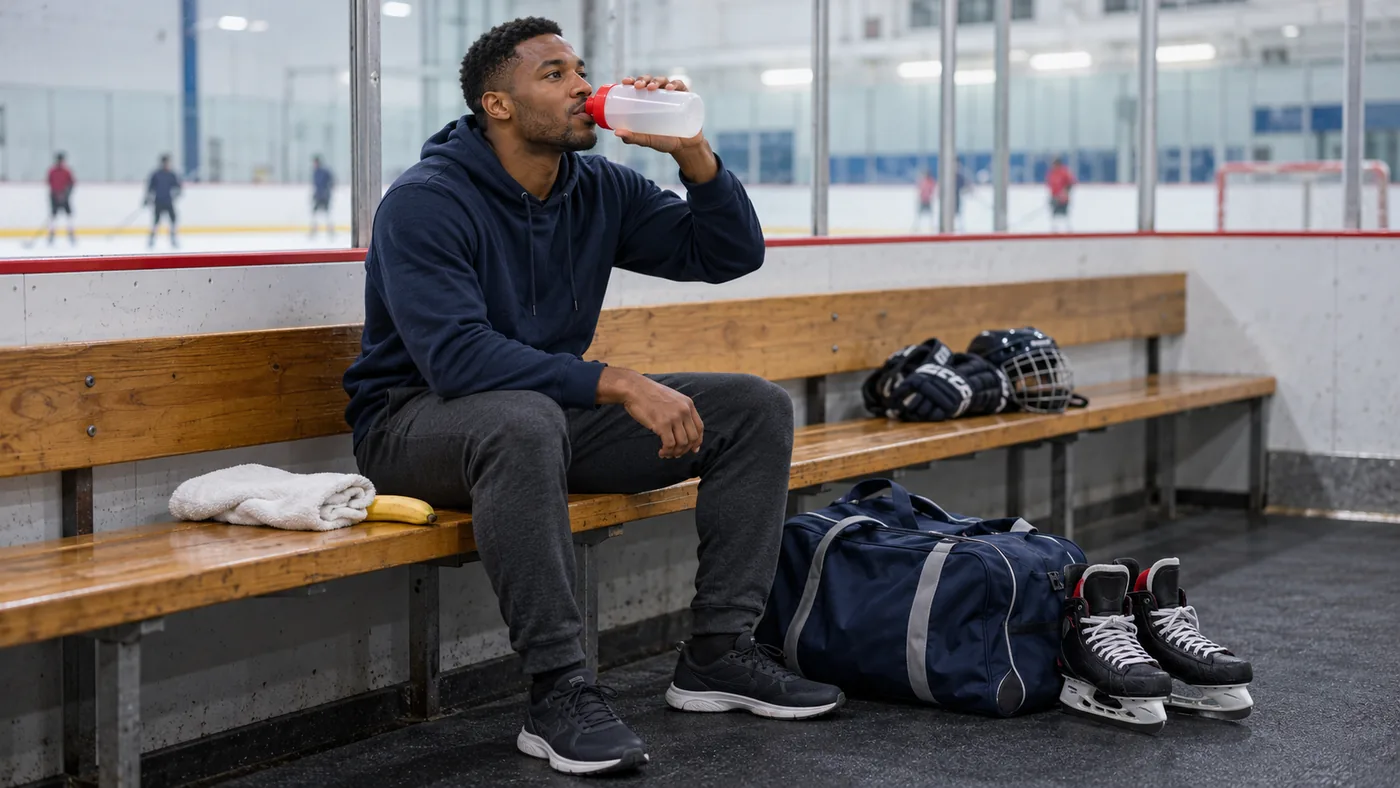
Rehydrate right away. You sweat more under all that gear than you realize. Start drinking water in the locker room and keep sipping on the way home. After a long or intense skate, a sports drink or chocolate milk can help replace fluids and electrolytes. A good check: your urine should be pale yellow by later that evening.
Refuel with a snack. Try to eat something with carbs and protein within about 30-60 minutes. Easy options to pack in your bag:
- Chocolate milk
- A banana with peanut butter
- Greek yogurt with granola
- A turkey or PB&J sandwich
- Trail mix and a piece of fruit
Change out of wet gear. Get out of sweaty base layers quickly and into dry, warm clothes, especially in a cold rink or on a chilly drive home.
That Evening: Eat, Air Out, and Sleep
Eat a real meal. Within a few hours of skating, sit down to a balanced plate: a lean protein (chicken, fish, eggs, beans), a good carb (rice, pasta, potatoes, whole-grain bread), and some fruits or vegetables. Protein helps repair muscle, and carbs refill the energy your legs burned.
Air out your gear. Take everything out of the bag as soon as you get home and let it dry completely. It keeps the smell down, helps prevent skin infections, and means you're not pulling on damp pads next time. Wipe your skate blades dry to prevent rust.
Try a warm shower or bath. Warm water helps tight muscles relax. Some players like a cold water rinse or ice on sore spots after a hard game; both are fine, so go with what makes you feel better.
Prioritize sleep. Sleep is the most powerful recovery tool there is, and it's free. That's when your body does most of its repair work.
- Youth players (roughly 6-12): aim for 9-12 hours
- Teens (13-18): aim for 8-10 hours
- Adults: aim for 7-9 hours
Late game? Put screens away, keep the room cool and dark, and try to keep a regular wake-up time the next morning.
The Next Day: Keep Moving, Listen to Your Body
Choose active recovery over the couch. Light movement helps sore muscles loosen up faster than sitting still. Try 15-20 minutes of something easy: a walk, a bike ride, a swim, or some light stretching or yoga. You should be able to hold a conversation the whole time.
Foam roll tight spots. Spend 30-60 seconds each on your quads, glutes, hamstrings, calves, and upper back. Roll slowly and ease off anything that feels sharp.
Keep drinking water. Hydration isn't just a post-game thing. Carry a water bottle through the day, especially before your next skate.
Know the difference between soreness and injury. Some muscle soreness a day or two after a hard skate is normal. It feels dull and achy, is spread across a muscle, and gets better as you warm up. Tell a parent, coach, or athletic trainer, and get it checked, if you notice:
- Sharp or stabbing pain, or pain in a joint
- Swelling, bruising, or pain that gets worse over a few days
- Pain that changes the way you skate, walk, or shoot
- Any headache, dizziness, confusion, or sensitivity to light after a hit
A possible concussion always means off the ice until a medical professional clears you. When in doubt, sit it out.
Your RinkReady Recovery Checklist
Screenshot this and keep it handy:
- [ ] Easy cool-down (5 minutes)
- [ ] Stretch hips, groin, hamstrings, quads, back, and shoulders
- [ ] Water or chocolate milk before leaving the rink
- [ ] Snack with carbs and protein within an hour
- [ ] Dry clothes on, wet gear out of the bag at home
- [ ] Balanced dinner
- [ ] A full night of sleep
- [ ] Light movement and foam rolling the next day
- [ ] Speak up about any pain that feels sharp, swollen, or off
Recovery is part of training, not a break from it. The players who feel fast and strong in the third period, and late in the season, are usually the ones who take care of the small stuff between skates. Build these habits now, and you'll show up to every practice and game ready to go.